What to Expect at Well-Child Visits by Age
A parent-friendly guide to what happens at each well-child visit.

Regular checkups are the foundation of healthy growth
Well-child visits are more than just physical exams — they’re milestones for tracking development, discussing concerns, and building a relationship with your pediatrician. These visits ensure your child stays healthy and supported through every stage.
1. Newborn to 1 year
Your baby’s first year includes the most frequent visits — typically at newborn (3-5 days of life), 1, 2, 4, 6, 9, and 12 months. Your pediatrician will:
- Measure growth (weight, length, and head size)
- Check feeding and sleep patterns
- Review early milestones like smiling and rolling
- Provide vaccines and safety guidance
- Answer questions about development or postpartum adjustment
Tip: Bring a list of feeding amounts, sleep routines, and any concerns about crying, rash, or reflux.
2. Toddler years (15 months to 3 years)
Visits usually happen at 15, 18, 24, 30, and 36 months. Expect discussions about:
- Walking, speech, and developmental milestones
- Picky eating and nutrition
- Sleep routines and toilet training
- Immunizations and early screenings (hearing, lead, autism)
Tip: Mention any tantrums or sleep regressions — these are common topics your pediatrician can help with.
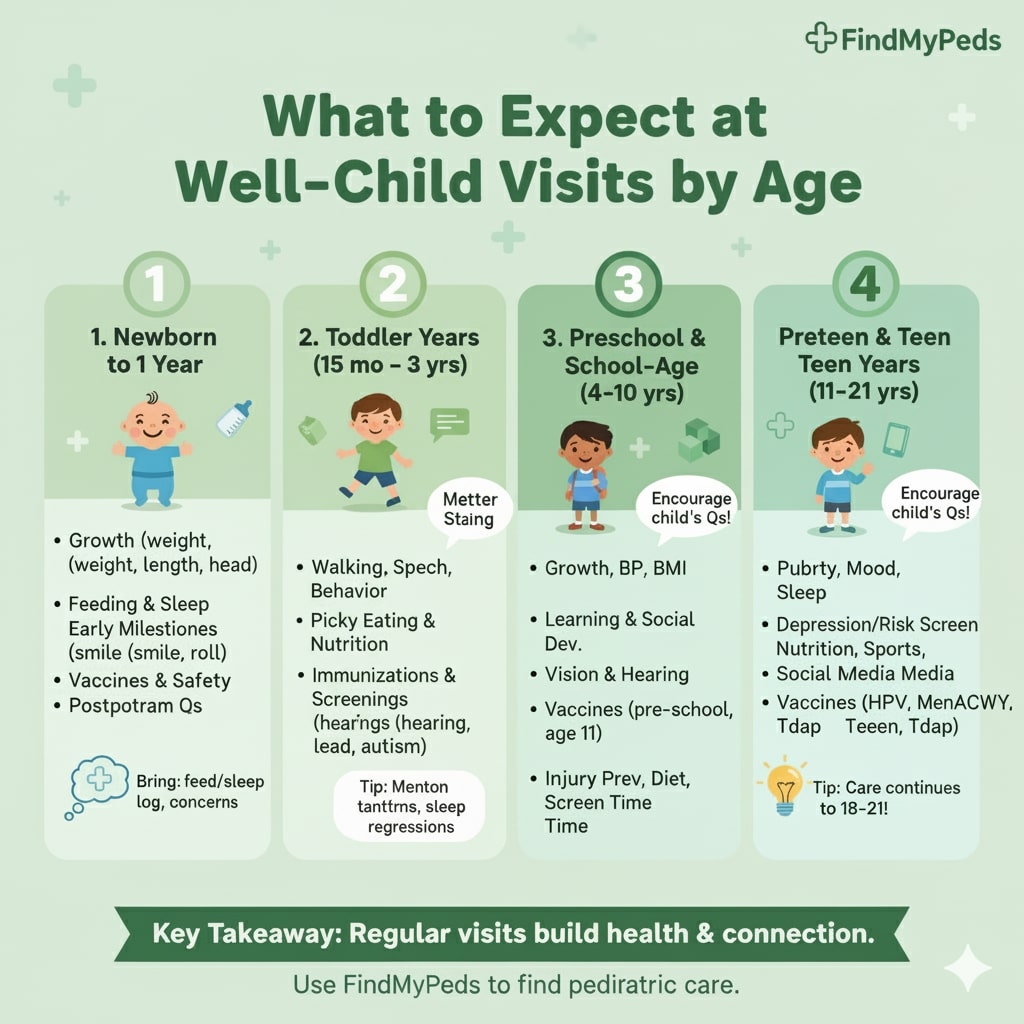
3. Preschool and school-age (4–10 years)
Once your child starts school, visits occur yearly. Your pediatrician will:
- Monitor growth, blood pressure, and BMI
- Discuss learning, attention, and social development
- Review vision and hearing
- Provide vaccines (before school entry and again around age 11)
- Talk about injury prevention, diet, and screen time
Tip: Encourage your child to ask their own questions — it builds confidence and trust.
4. Preteen and teen years (11–21 years)
These visits become a space for independence and open discussion. Your pediatrician may:
- Address puberty, mood, and sleep habits
- Screen for depression and risk behaviors
- Review nutrition, sports safety, and social media use
- Continue vaccines (HPV, meningococcal, Tdap)
- Offer private time for the teen to speak alone if needed
Tip: Well visits remain important through the teen years — most clinics continue pediatric care until age 18 or 21.
Use FindMyPeds to find independent pediatric clinics that offer comprehensive well-care through every age and stage.
Key takeaway
Each well-child visit is designed to guide your child’s growth and support your family. Regular visits build continuity, help detect issues early, and strengthen your connection with your care team.
Written by AI and reviewed for accuracy by Dr. Ossai (Board-certified Pediatrician).